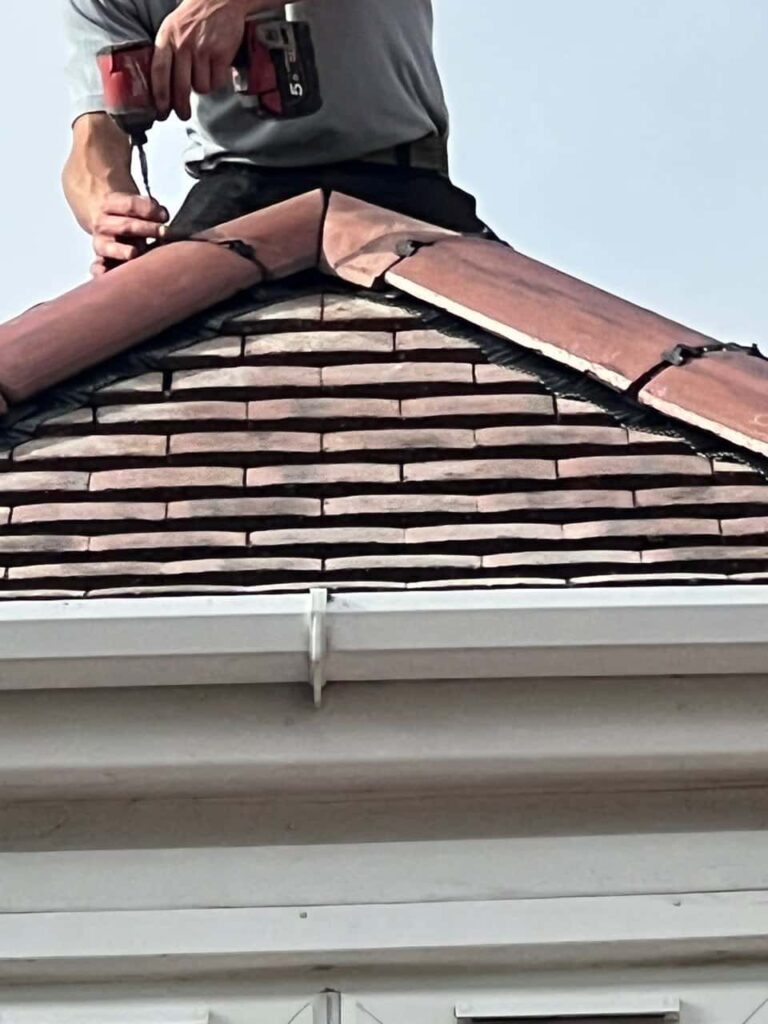
An older roof can perform reliably for many years and then appear to develop several problems within a relatively short period. A slipped tile may be followed by a leak, deterioration may become visible around flashing, or different sections of the roof may suddenly require attention. Although this can seem as though several unrelated failures have occurred at the same time, there is often a logical explanation.
Roofing materials and components are exposed to similar conditions throughout their service life. As they age, several parts of the roofing system can gradually approach the point where deterioration becomes noticeable. One weakness can also place additional pressure on surrounding materials or allow water to reach areas that were previously protected.
For homeowners in Coseley, West Midlands, several emerging roof problems should therefore be considered together. The important question is whether they are genuinely isolated defects or evidence that deterioration is becoming more widespread.
Why Do Multiple Problems Often Appear on an Older Roof?
A roof is a complete system rather than simply a collection of tiles or slates. Its performance depends on the roof covering, fixings, battens, underlay, flashing, valleys, ridges and other details working together.
Several problems can begin appearing when:
- Roofing materials have experienced similar periods of weathering
- Tiles or slates are becoming increasingly fragile
- Fixings or supporting components have deteriorated
- Underlay is no longer performing as effectively
- Flashing and roof junctions are showing signs of age
- Previous water ingress has affected neighbouring areas
- One weakness begins placing greater demands on surrounding materials
- Different parts of the roof have reached similar stages of deterioration
- Earlier localised repairs are surrounded by increasingly aged materials
The presence of several defects does not automatically mean that complete roof replacement is necessary. It does mean that looking beyond each individual symptom can provide a clearer understanding of the roof’s overall condition.
Roofing Components Age Together
Many of the materials within a roof will have been installed at approximately the same time.
Although they do not necessarily deteriorate at identical rates, they have experienced years of similar rainfall, temperature changes, wind and seasonal weathering.
This means that once one component begins showing significant deterioration, others of a similar age may also be approaching the point where problems become noticeable.
What appears to be a sudden cluster of defects may therefore be the visible result of deterioration that has been developing gradually for years.
Tiles and Slates Can Become More Vulnerable With Age
Roof coverings are continually exposed to outdoor conditions.
Individual tiles or slates can become damaged without indicating a wider problem, particularly after unusual weather. On an older roof, however, repeated cracking, slipping or breakage across different areas deserves closer attention.
The issue may no longer be one defective unit.
If surrounding materials are also becoming less dependable, replacing whichever tile has most recently failed may not explain why similar defects continue appearing elsewhere.
Assessing the wider covering helps establish whether the deterioration remains localised or has become more general.
Fixings Can Contribute to Repeated Movement
Tiles and slates rely on appropriate fixing and support to remain correctly positioned.
If roofing materials repeatedly slip or move in several locations, the visible covering may not be the only consideration. The condition of fixings and relevant supporting components may also need assessment.
This becomes particularly important when repositioned or replaced materials are followed by similar problems nearby.
Repeated movement can indicate that the roof needs to be considered as a system rather than continuing to treat each displaced tile as a completely independent event.
Battens and Underlay Are Hidden but Important
Some of the most important parts of a roof cannot be seen during an ordinary ground-level inspection.
Battens support the roof covering, while underlay forms part of the construction beneath it. Deterioration in these concealed components may only become apparent when leaks develop or roofing materials are disturbed during investigation.
An older roof can therefore look reasonably intact externally while problems are developing underneath.
Where several defects are occurring within the same general area, the condition beneath the visible covering can provide important information about why they are happening.
One Leak Can Affect More Than One Area
Water does not necessarily travel directly downwards once it enters a roof.
It can move along underlay, timbers and other surfaces before reaching the interior. This can make one defect appear to be several separate problems.
Conversely, several different entry points can sometimes create dampness within the same general internal area.
This is why diagnosis matters when an older roof begins leaking in more than one place. The number and position of internal stains alone may not accurately indicate how many external defects exist.
Prolonged Water Ingress Can Cause Secondary Problems
A small defect that remains unresolved can sometimes contribute to deterioration around it.
If water repeatedly reaches materials that should normally remain protected, the affected area can gradually become more extensive.
The original problem may have been relatively simple, but the consequences can become more complicated over time.
When an older roof presents several defects close together, it is therefore useful to establish whether they developed independently or whether one earlier weakness contributed to surrounding deterioration.
Flashing Can Deteriorate Alongside the Main Roof Covering
Lead flashing and other weatherproofing details protect vulnerable roof junctions.
These areas experience the same long-term exposure as the rest of the roof. An older roof may therefore begin developing problems around flashing at approximately the same stage that tiles, slates or other components also require attention.
A flashing defect may remain completely localised.
However, when it occurs alongside several other signs of deterioration, the wider condition of the roof should be considered before assuming that repairing the flashing alone explains every symptom.
Valleys Can Become a Source of Wider Problems
Roof valleys handle concentrated amounts of rainwater from adjoining slopes.
Deterioration within a valley can therefore produce significant symptoms, including water ingress affecting surrounding roof areas.
On an older roof, problems may involve not only the visible valley detail but also neighbouring roof coverings or underlying materials.
A proper assessment can determine where the deterioration begins and ends rather than simply attending to the most visibly damaged point.
Different Roof Slopes Can Deteriorate at Different Rates
A roof does not necessarily age uniformly.
Individual slopes can experience different levels of exposure depending on their position and orientation. Some sections may therefore deteriorate sooner than others.
This can explain why one part of an older roof develops several problems while another continues to perform satisfactorily.
Uneven deterioration is important when deciding what work is appropriate. A poorly performing section does not automatically mean that every part of the roof requires the same attention.
Previous Repairs Can Highlight the Condition of Surrounding Materials
A correctly completed local repair can remain sound while the original materials around it continue ageing.
Over time, another defect may develop immediately beside the repaired section or elsewhere on the roof.
This can sometimes create the impression that previous repairs have failed when they are actually still performing correctly.
Looking at the location and condition of earlier work helps distinguish between a recurring defect and a new problem developing within neighbouring older materials.
Small Defects Can Become Noticeable in Quick Succession
Roof deterioration is often gradual, but the symptoms are not always gradual.
Several components may slowly weaken over many years without producing obvious problems. Once they cross a certain point, visible defects can appear relatively close together.
A homeowner might therefore experience years with little roofing attention followed by several repairs within a much shorter period.
This change in frequency can be useful information because it may indicate that the overall condition of the roof is changing.
Repeated Repairs Can Become a Pattern
Occasional roof repairs are normal and do not necessarily indicate that the complete roofing system is deteriorating.
A different situation develops when new problems repeatedly appear in unrelated areas.
If one leak is followed by displaced tiles, another leak and deterioration around a separate roof detail, it becomes increasingly important to assess the complete pattern.
Considering each problem independently can overlook the fact that several components may now be reaching a similar stage of deterioration.
The Most Visible Defect May Not Be the Main Problem
When several roofing problems appear, attention naturally goes to whichever symptom seems most serious.
However, the largest ceiling stain or most obvious broken tile does not necessarily reveal the underlying condition of the roof.
A less visible defect around a junction, valley or concealed component may be responsible for a significant proportion of the problem.
Professional assessment should therefore establish the cause and extent of deterioration rather than prioritising defects purely according to how noticeable they are.
Several Problems Do Not Automatically Mean Roof Replacement
Multiple defects can understandably raise concerns about whether an older roof has reached the end of its useful service.
However, the number of visible problems is only one consideration.
If deterioration is confined to one section and the surrounding roof remains serviceable, targeted repairs may still be appropriate. Several closely related defects can sometimes be resolved as part of one well-planned repair.
Replacement becomes more relevant when deterioration is widespread, new problems continue appearing across different areas and the surrounding materials no longer provide a dependable basis for further repairs.
When Does a Wider Roof Assessment Make Sense?
A broader assessment becomes increasingly useful when there is a noticeable change in the behaviour of the roof.
Examples include leaks appearing in different places, increasingly frequent tile movement, deterioration across several roof details or repeated repairs being required within a relatively short period.
The purpose is not to assume that extensive work is needed.
A wider assessment may confirm that the defects are confined to one section. Equally, it may identify a pattern of deterioration that would be missed by concentrating solely on the latest problem.
Repair Decisions Should Consider Surrounding Materials
A successful localised repair relies partly on the condition of the roof around it.
If surrounding tiles, slates and supporting components remain sound, replacing or repairing the defective area can provide an appropriate solution.
If neighbouring materials are themselves deteriorating, repeatedly attaching new repairs to increasingly unreliable roofing becomes less practical.
Understanding the condition around each defect therefore helps determine whether continued repairs remain suitable.
Why Accurate Diagnosis Prevents Unnecessary Work
When several problems appear simultaneously, there are two unhelpful assumptions: that every defect is completely unrelated, or that the entire roof must automatically be replaced.
Neither should be decided without inspection.
Accurate diagnosis establishes whether the problems share a cause, how far deterioration extends and which sections remain serviceable.
This allows the response to remain proportionate. Sound areas can be retained while genuine weaknesses receive the attention they require.
The Value of Professional Roof Assessment
Older roofs often require a broader perspective because individual defects can form part of a developing pattern.
At Coseley Roofing Repairs, we assess the immediate problem together with relevant surrounding roofing components to understand whether deterioration is localised or more widespread. Previous repairs, visible roof coverings, junctions and signs of water ingress can all help build a clearer picture of the roof’s condition.
For homeowners in Coseley, West Midlands, this approach helps ensure that recommendations are based on what is actually happening across the roof rather than simply responding to whichever defect appeared most recently.
Conclusion
An old roof can start developing several problems at once because many of its components have experienced similar years of weathering and may begin reaching comparable stages of deterioration. Problems with tiles or slates, fixings, flashing, valleys and concealed roofing materials can therefore become noticeable within a relatively short period.
Several defects do not automatically mean that the entire roof requires replacement. The important question is whether the problems remain localised or represent a wider pattern of deterioration.
If your roof in Coseley, West Midlands has begun requiring attention more frequently or several different problems have appeared, contact Coseley Roofing Repairs. We can assess the affected areas, consider the wider condition of the roof and recommend an appropriate course of action based on what we find.
Call us on: 01902 951 790
Click here to find out more about Coseley Roofing Repairs
Click here to complete our contact form and see how we can help with your roofing needs.