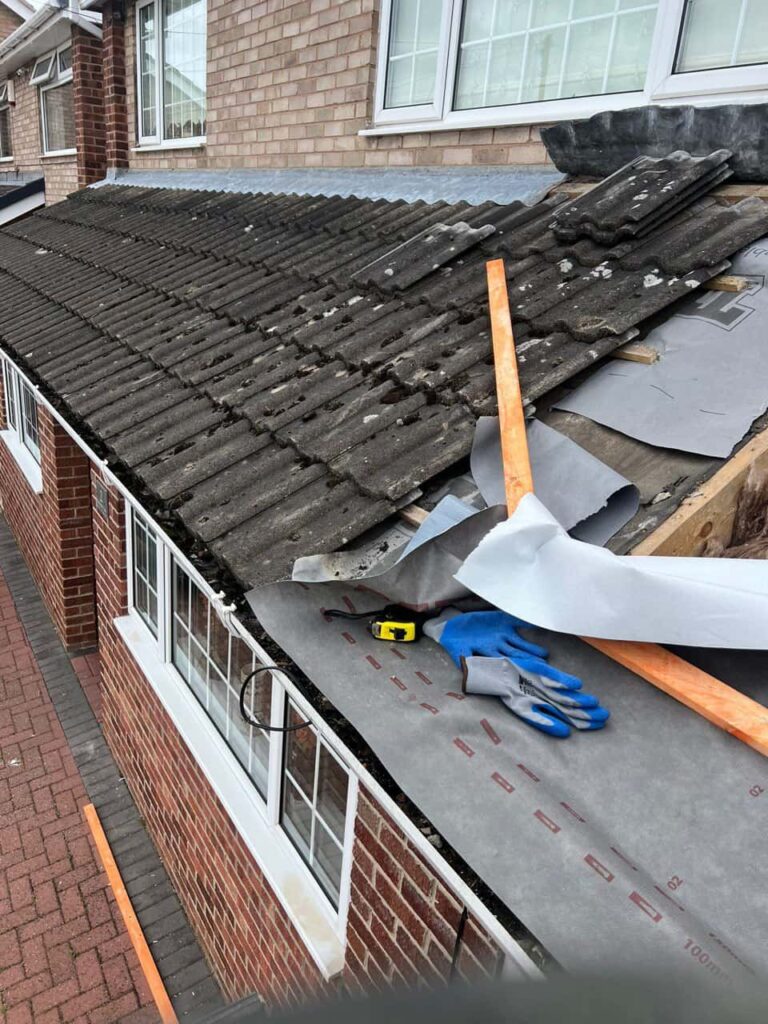
Heavy rain and strong winds can put considerable strain on a roof. Even when there is no obvious major damage, weather can loosen tiles, expose weak points and allow water to enter through damaged areas.
For properties in Coseley, West Midlands, checking for signs of roof damage after severe weather can help identify problems before they develop further. Understanding the types of repairs that may be required can also help property owners know when professional attention is appropriate.
Common Types of Roof Damage After Bad Weather
The type of damage depends on the roof’s condition, construction and exposure to the weather. Some problems may be visible from ground level, while others require a closer professional inspection.
Slipped or Missing Roof Tiles
Strong winds can cause roof tiles to move, crack or become detached. A missing tile can leave the underlying roof structure exposed to rainfall, increasing the risk of water ingress.
Individual tiles that have slipped out of position may also create gaps where rain can enter.
Cracked or Broken Tiles
Heavy weather can cause existing weaknesses in roof tiles to become more noticeable. Cracked or broken tiles may allow water through and should be assessed promptly.
Where the surrounding roof remains in good condition, individual damaged tiles can often be replaced rather than disturbing the wider roof covering.
Damaged Flashing
Flashing around chimneys, roof junctions and other vulnerable areas can become loose or damaged during periods of strong wind and heavy rain.
Defective flashing can create a route for water to enter, even when the main roof covering appears intact.
Leaking Roof Areas
Persistent rainfall can expose existing weaknesses in roofing materials, joints and seals. Water may enter through a relatively small opening and travel beneath the roof covering before appearing inside the property.
A damp patch on a ceiling therefore does not necessarily indicate that the roof is damaged directly above it.
Warning Signs to Look For
After heavy rain and wind in Coseley, West Midlands, look for signs such as:
- Missing, cracked or displaced roof tiles
- Water stains on ceilings or walls
- Damp areas in the loft
- Dripping water following rainfall
- Loose flashing or roofline components
- Damaged mortar around roof features
- Blocked or overflowing gutters
- Visible gaps in the roof covering
Even if a leak stops when the weather improves, the underlying defect may still need attention.
Which Roof Repairs May Be Required?
The appropriate repair depends on what caused the damage and how extensive it is.
Tile Replacement
Where individual tiles have cracked, broken or become displaced, replacing the affected tiles may be sufficient. The surrounding area should also be checked to ensure there are no additional loose or damaged tiles.
Flashing Repairs
Loose or deteriorated flashing may need to be repaired or replaced to restore protection around roof junctions and other vulnerable areas.
Mortar Repairs
Weather can cause mortar around ridge tiles and other roof features to crack or deteriorate. Where appropriate, damaged mortar may need to be repaired to help maintain the integrity of these areas.
Gutter and Drainage Repairs
Heavy rainfall can highlight problems with gutters, downpipes and other drainage components. Blockages, damage or poor water flow should be addressed to help prevent water from collecting against the roof.
More Extensive Roof Repairs
If weather damage has affected several parts of the roof or exposed an existing underlying problem, more extensive repairs may be necessary. A professional inspection can help determine the condition of the roof before deciding what work is appropriate.
What Should You Do After Stormy Weather?
If you suspect roof damage, check the areas you can safely observe from ground level. Inside the property, look for damp patches, water stains and signs of moisture in the loft.
Avoid climbing onto the roof yourself, particularly when surfaces are wet or materials may have become unstable. A professional roofer can inspect areas that are difficult or unsafe to access and identify potential defects.
Why Prompt Repairs Matter
A small opening in the roof can allow repeated water ingress whenever it rains. Over time, moisture can affect roofing materials and areas beneath the roof.
Arranging an inspection when damage is first noticed can help identify the source of the problem and allow appropriate repairs to be carried out before the condition worsens.
Professional Roof Repairs in Coseley
Roof damage following heavy rain and wind can range from a single displaced tile to problems affecting flashing, mortar, drainage or several sections of the roof.
Coseley Roofing Repairs can assess weather-related roof damage in Coseley, West Midlands and determine which repairs are appropriate for the condition of the roof.
Conclusion
Heavy rain and strong winds can expose weaknesses in a roof and cause damage such as slipped tiles, cracked materials, damaged flashing and leaks. Checking for warning signs after severe weather and addressing problems promptly can help maintain the roof and reduce further water ingress.
If your roof in Coseley, West Midlands has been affected by heavy rain or wind, contact Coseley Roofing Repairs to discuss the damage and arrange a professional roof inspection or repair.
Call us on: 01902 951 790
Click here to find out more about Coseley Roofing Repairs
Click here to complete our contact form and see how we can help with your roofing needs.